Gum disease.
What a pocket is, why the millimetres matter, and which cleaning goes with which number.
The four stages, side by side.
Left to right: the pocket gets deeper, tartar spreads down the root, and the bone drops.
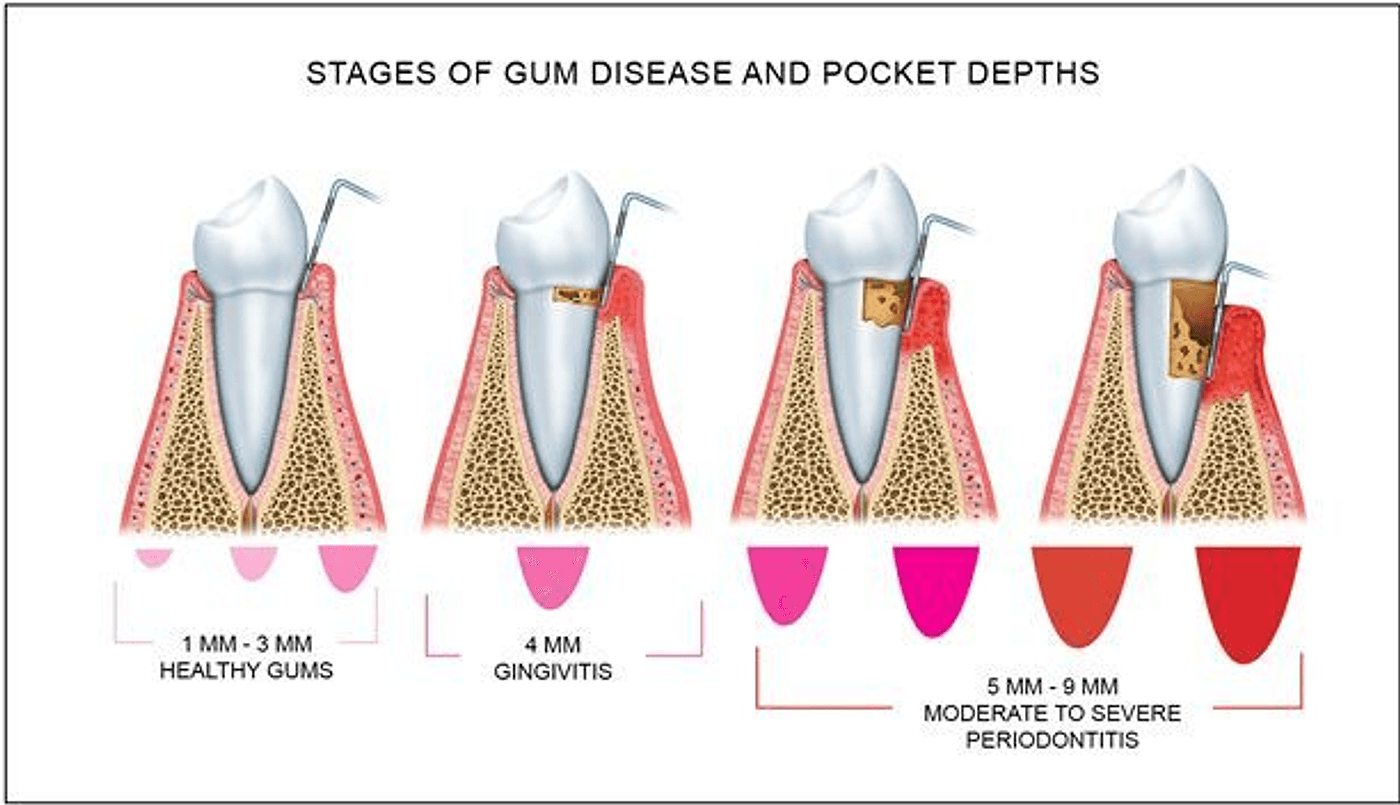
Your toothbrush only gets 2mm down.
Floss gets about 3mm. Past that, nothing you own reliably reaches the bottom. So a deep pocket is not just a bigger number. It is a spot you cannot keep clean, no matter how hard you try. That is the whole problem.
Healthy
Your brush and floss still reach the bottom. You can keep it clean yourself.
The tipping point
Nothing you own reliably reaches the bottom anymore.
Deep cleaning territory
Bacteria sit on the root until a professional cleaning removes them.
If you had a deep cleaning, read this part
A deep cleaning is the start, not the end. Two cleanings a year is no longer enough. The bacteria grow back down into the pocket in a few months. Each time they do, you risk losing a little more bone, and bone does not come back on its own.
So you come back more often, usually every three to four months. Your dentist sets the exact gap based on how your gums do. It is the thing that holds the line. People who skip it usually end up right back where they started, with less bone than before.
The reset
Clears the pocket out. Pockets usually get somewhat shallower as the gum heals, but the lost bone underneath does not rebuild itself.
The bacteria grow back
Roughly how long they need to reach the bottom of the pocket again.
Maintenance gets there first
That visit is what holds the line, for as long as you keep it.
Want to know your own numbers?
A full periodontal exam measures six spots on every tooth and shows you where you stand.