Before
AfterCase 01
Veneers for one even shade
- Goal
- Colour that never matched from one front tooth to the next
- Approach
- Porcelain veneers, layered to a single consistent tone
- Result
- A uniform shade that still behaves like enamel instead of paint
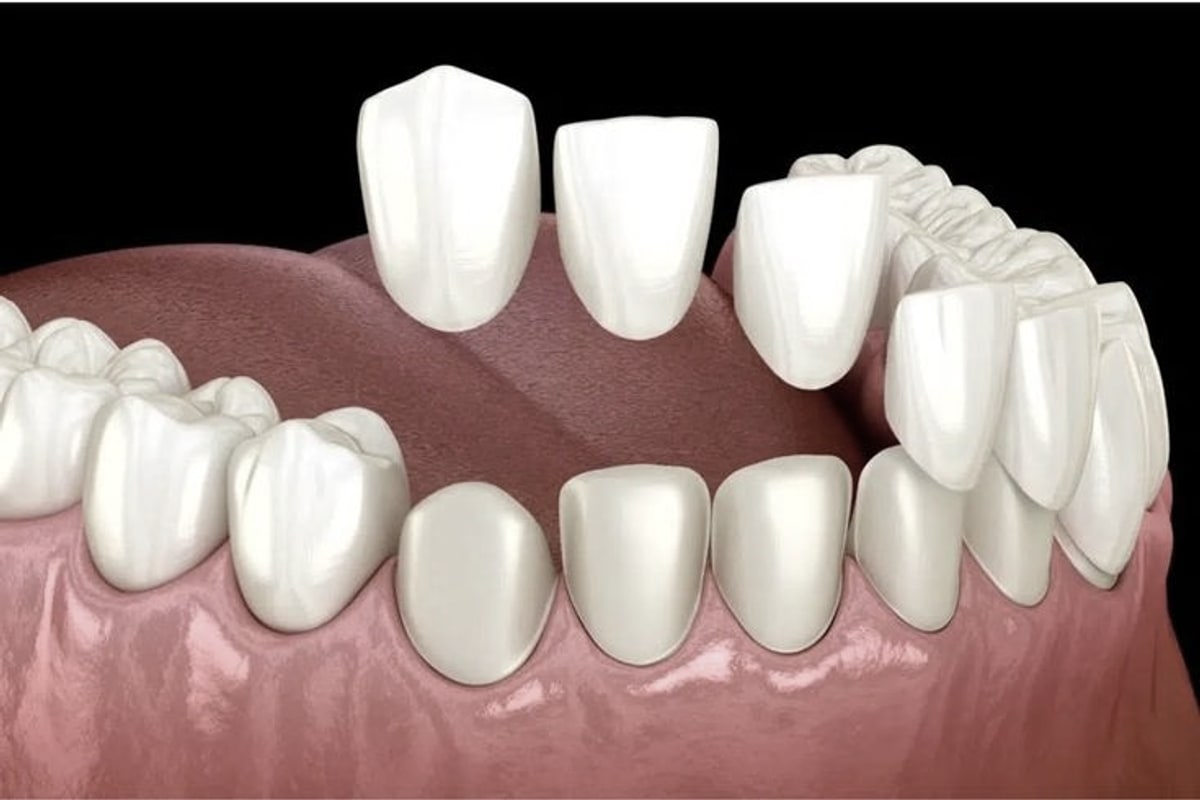
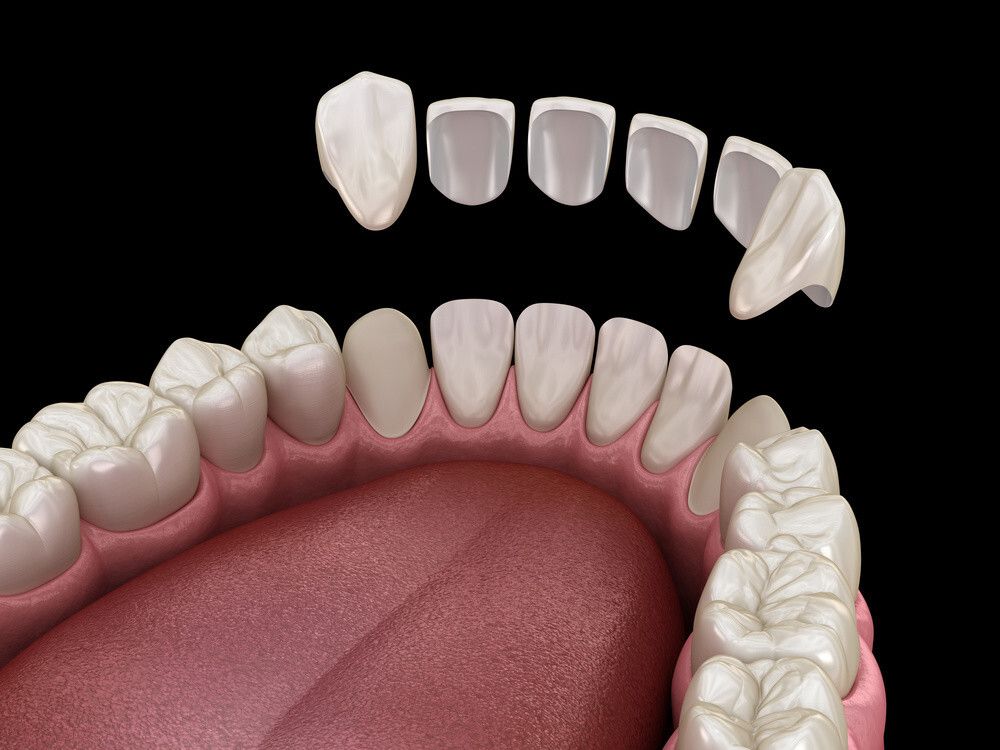
Thin, hand-shaded ceramic bonded to the front of your teeth. It is the only treatment that changes shape, length, alignment and color at the same time, and the only one where the craftsmanship is immediately obvious to everyone who looks at you.
Veneers are the answer when several things are wrong at once and they all have to be solved together. If only one thing is wrong, there is usually a smaller way to fix it.
Anyone can order white porcelain. The difference between veneers that look expensive and veneers that look done is in decisions most people never hear about:
Preparing a tooth for porcelain removes enamel, and enamel does not grow back. That means veneers are a lifetime commitment: they will need replacing eventually, and the tooth underneath will always need something on it. Veneers are still very much worth doing when they are the right call. Just have them done by someone who treats that decision as permanent, because it is.
If your case can be handled more conservatively, with bonding, aligners, or simply whitening, you will be told that first, even though it is the smaller treatment.
The standard: if someone can look at your smile and identify that work was done, the work was done wrong.
Comprehensive exam with x-rays and design, then the preview, then placement. Usually across a few weeks.
With a night guard if you grind, and normal cleanings.
Enamel is removed. Treated as a permanent decision from the first conversation.
Before
AfterCase 01
Before
AfterCase 02
Unretouched clinical photography of real patients. Individual results vary.
Most practices make you call to find out. Here is the honest version: the range is wide, and both ends of it are real work.
$800 to $4,000 per tooth
Those are market figures. What your case costs gets decided after somebody looks in your mouth, which is why a firm number over the phone is a price for a procedure rather than for a patient.
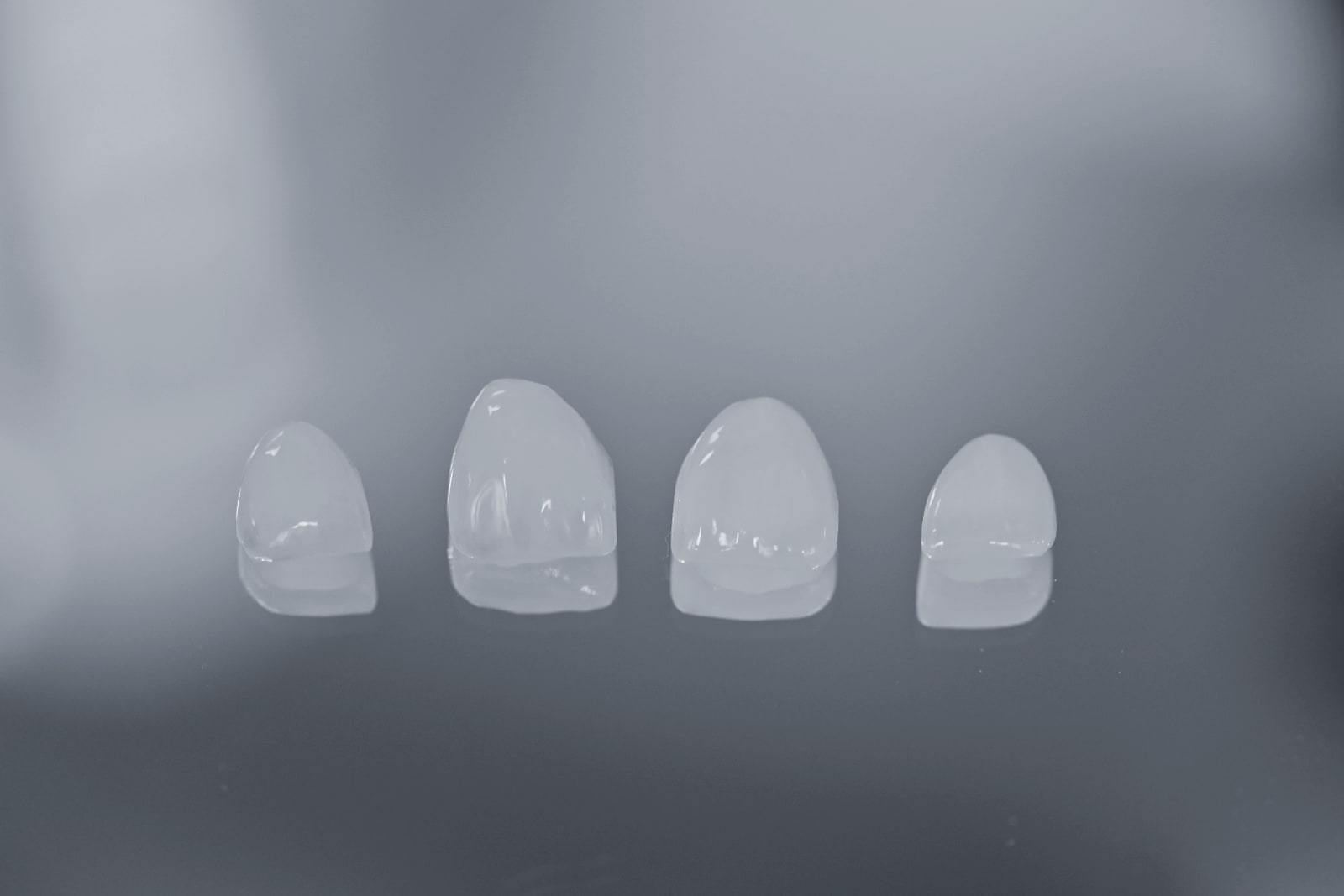
A milled veneer is cut by machine from one uniform block. A layered veneer is built up by hand, hours per tooth. That labor is the main reason two honest quotes differ by a factor of three.
How wide your smile is when you smile naturally decides where the work has to stop. It is a clinical judgment rather than an upsell, and it moves the total more than anything else.
Exam, x-rays, photography, a designed mockup, and a preview you wear and can change. A cheap case is usually cheap because it skips the preview.
A storefront on a famous street costs more to run, and that lands in the quote. It is a real difference in the number and it says nothing about the ceramic.
What you get here: photos and a scan first, then a written, itemized plan with real figures that you take home. No deposit to find out what it would cost, and no pressure to decide in the room.
Not if they are done properly. The reason bad veneers are obvious is uniformity: every tooth the same width, the same flat white, no translucency at the biting edge. Real enamel is none of those things. Yours are shaped to your face and layered so light passes through the edges the way it does in a natural tooth. That is the entire standard here.
It depends on how wide your smile is when you actually smile, not on a package. Some people need six, most need eight to ten, some need only two to fix what is bothering them. You will be shown exactly where the design needs to stop so it does not create a visible line between treated and untreated teeth.
Some enamel has to be removed so the porcelain has room to sit without looking bulky, but the amount is deliberately minimal and only where it serves the result. Teeth are never reduced further than the design requires. If your case can be handled with bonding instead, you will be told that.
Well-made porcelain, placed correctly and looked after, commonly lasts 10 to 20 years or more. What shortens that: grinding without a night guard, skipping cleanings, and using your front teeth as tools. Porcelain does not stain the way natural enamel does, so the color holds.
It depends on how many teeth are involved and what shape they are in, so any number quoted before an exam is a guess. After the exam you get an itemized plan with real figures before you commit to anything. No deposit just to find out what it costs.
Treatment is done with proper anaesthesia and an unhurried approach. Most patients describe it as far easier than they expected, and “gentle” is the word that comes up most often in reviews. Some temperature sensitivity for a few days afterwards is normal and settles.
Conservative, same-day repairs to chips, small gaps and worn edges. No drilling down healthy teeth.
Read more 02The cheapest thing that works, and the first thing to try before anything permanent.
Read more 03The full plan when several things need fixing at once and they all have to agree with each other.
Read more 04Rebuilding teeth that are cracked, worn through, or carrying old failing work.
Read moreThree questions takes about a minute, or call and ask for Dr. Bonifatto by name.